Background
Redfin agents meet hundreds of customers a year, but most aren't ready to buy yet
Real estate agents juggle relationships with hundreds of customers. This is especially true for Redfin, where they meet customers who schedule tours via the website and app. Buyer timelines vary wildly: the median search is 8 weeks, but 32% take longer than 6 months. Agents need to work hard to make sure they're top of mind for a customer when they're finally ready to buy.

Research
The best agents stayed in touch, but their methods were highly manual, and hard to scale to other team members.
We studied high-performing agents to understand their relationship management. They stayed proactive, patient, and personal. But their methods—whiteboards, spreadsheets, memory—didn't scale. Redfin's tools tracked recent activity well but missed customers on long timelines or those who went quiet.
Our tools were pretty good at helping agents keep up with folks who made steady progress, but there were a lot of ways for customers to fall through the cracks.
If a customer was touring homes regularly, asking questions, or doing other activities that signaled intent to buy, our system would surface them to agents regularly. But even motivated buyers may get too busy to tour homes, or our agents be focused on high-priority deals. When this happened, it was easy to lose track of customers.




Product strategy
I outlined a three-part system to help agents stay in touch with prospective buyers.
Redfin agents already worked long hours: we couldn't simply ask them to talk to more customers, if they were at their limit. We needed to help them reach more customers without dramatically increasing their workload. Our approach centered on three themes:
Give agents a way to track customers’ progress, and start training new agents to take an active role in the process to get a customer ready to buy or sell.
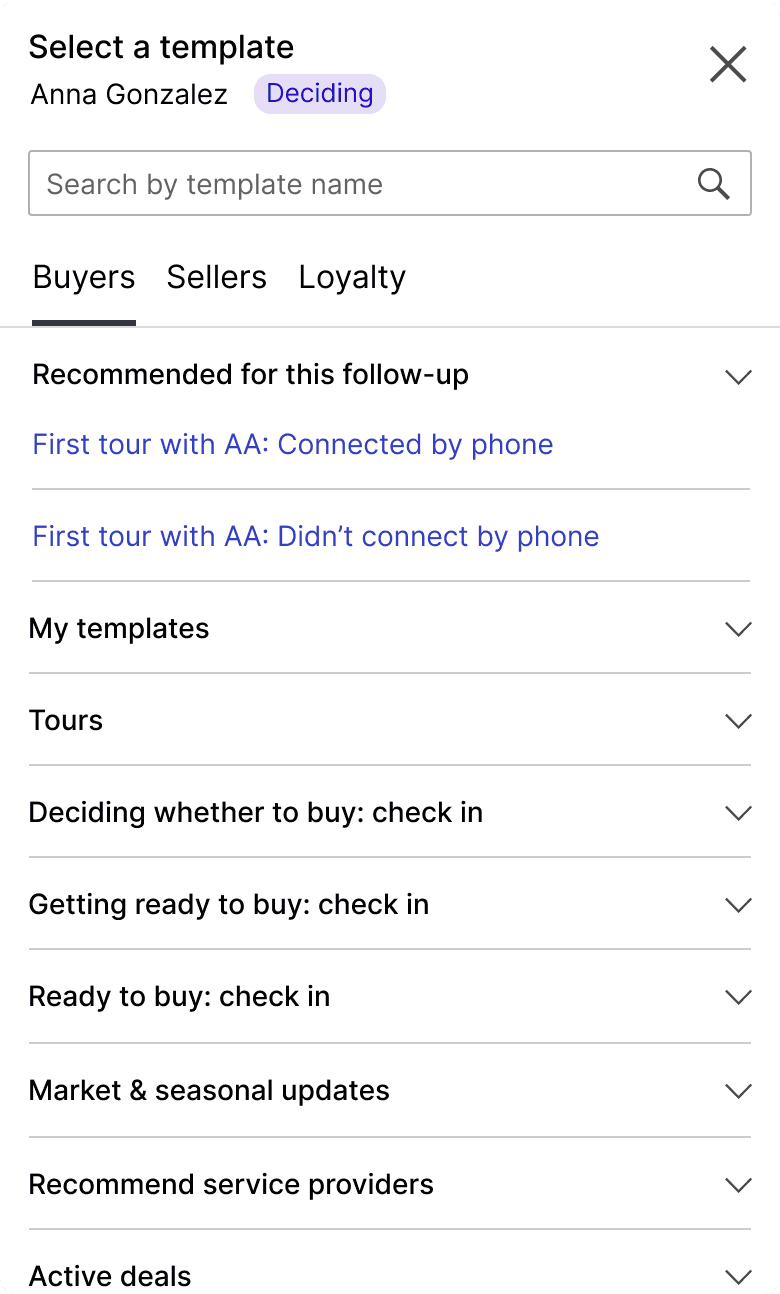
It can take a while for people to start their home search in earnest. Help agents identify who to check in with, based on Redfin activity, or time since last contact.
Make it easy for agents to send messages that are informative, conversational, and personal, particularly with customers they don’t know well.
Customer pipeline tool
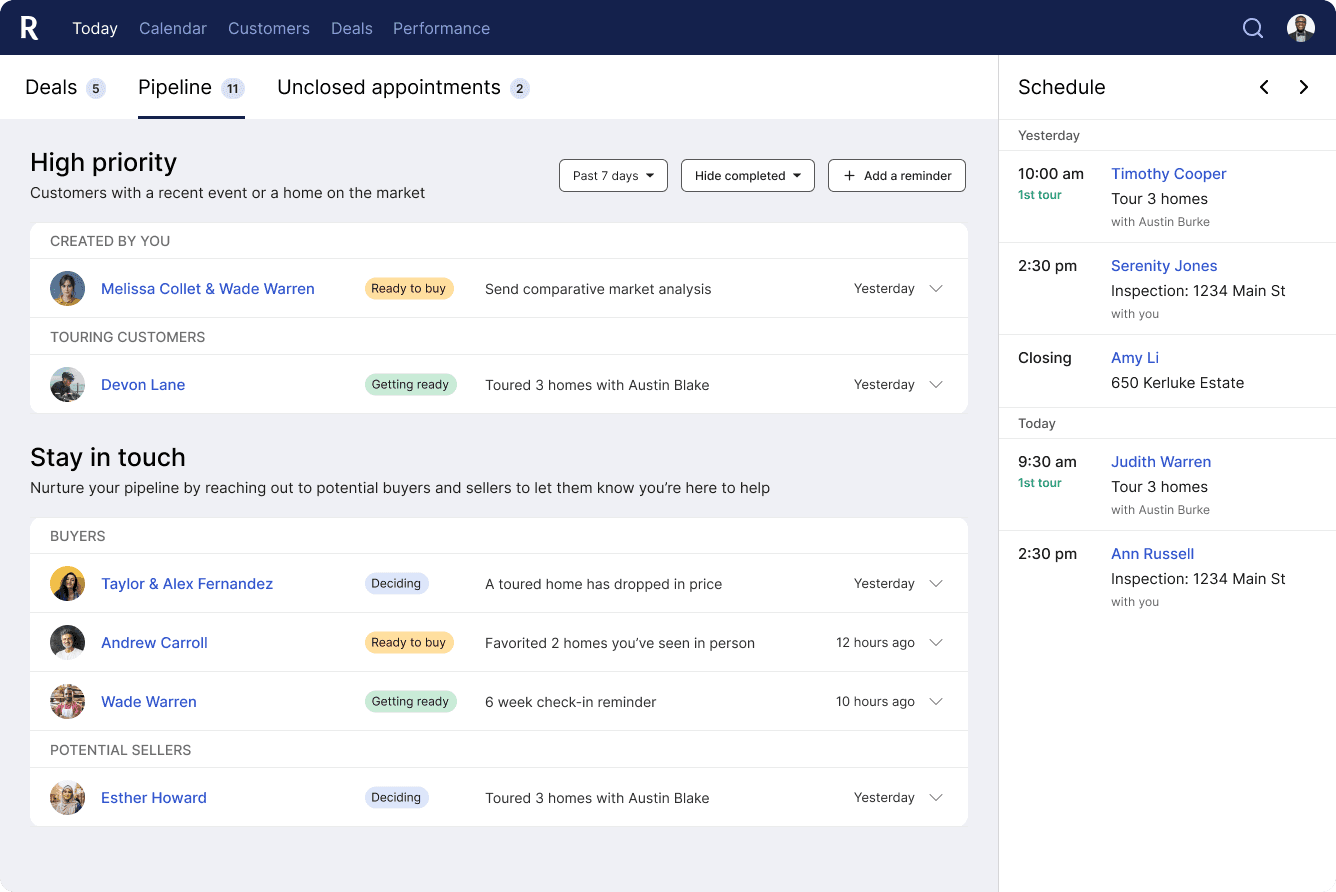
We started with a pipeline tool that allowed agents to "bookmark" customers who seemed most likely to buy a home soon.
It’s common for sales software to use pejorative language for customers: “hot and cold”, “dead lead”, “A, B, and C” grades. Extensive research with agents helped us propose a system and a sales training guide that was intuitive, but also highlighted the agent’s role in preparing a customer to buy.
Check-in plans
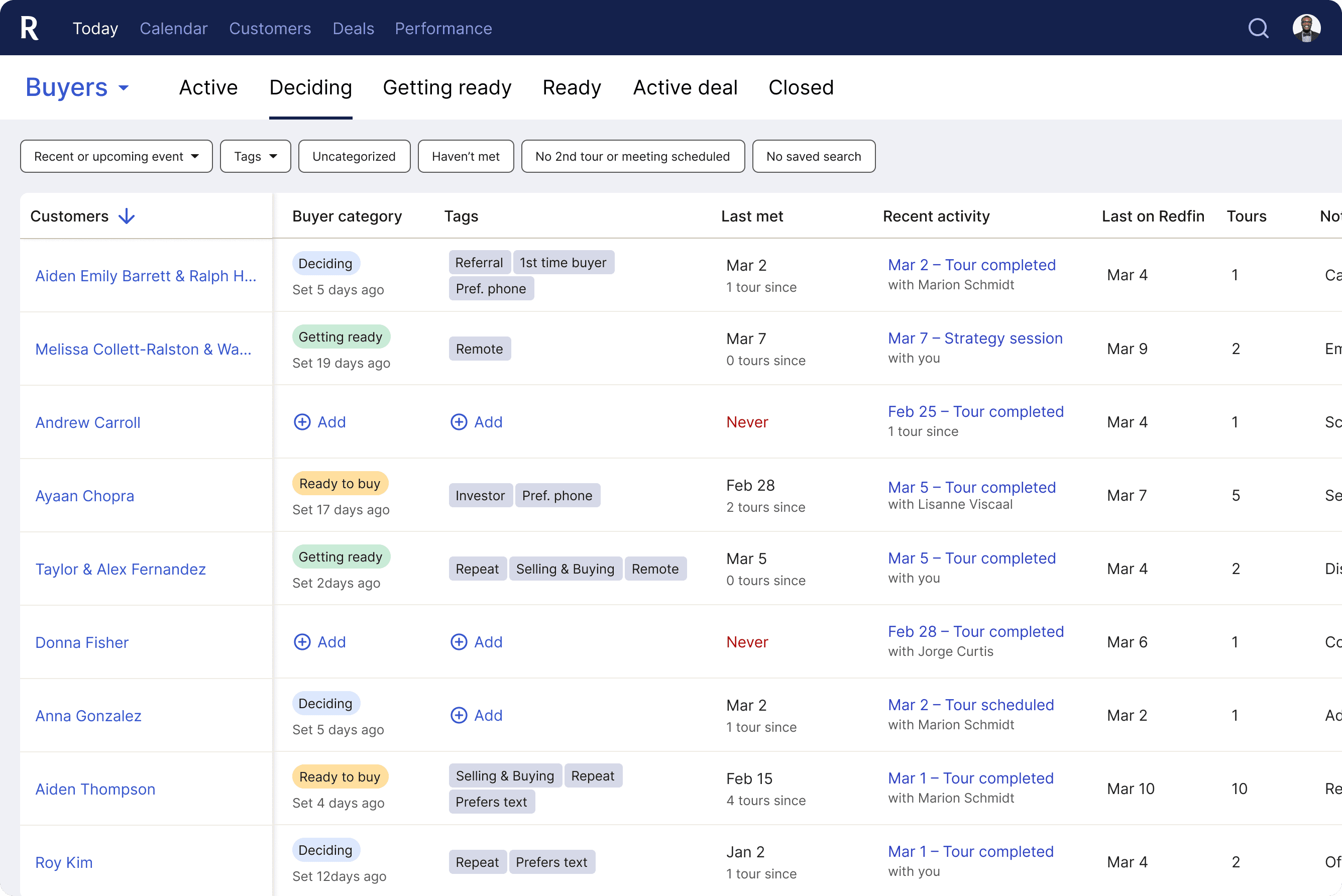
Next, we built customizable check-in plans that would help an agent stay in touch over the long term.
Agents set a check-in frequency for each customer, and would receive basic reminders to get in touch, if we hadn't detected a recent contact. To ensure that agents weren't overwhelmed by the new reminders, we prioritized the list on their homepage, and suggested adjustments to the plan if it had been inactive for some time.
Email system
Winning a customer could require months of occasional check-ins. Even top agents acknowledged that it was hard to know what to say to these customers, time after time.
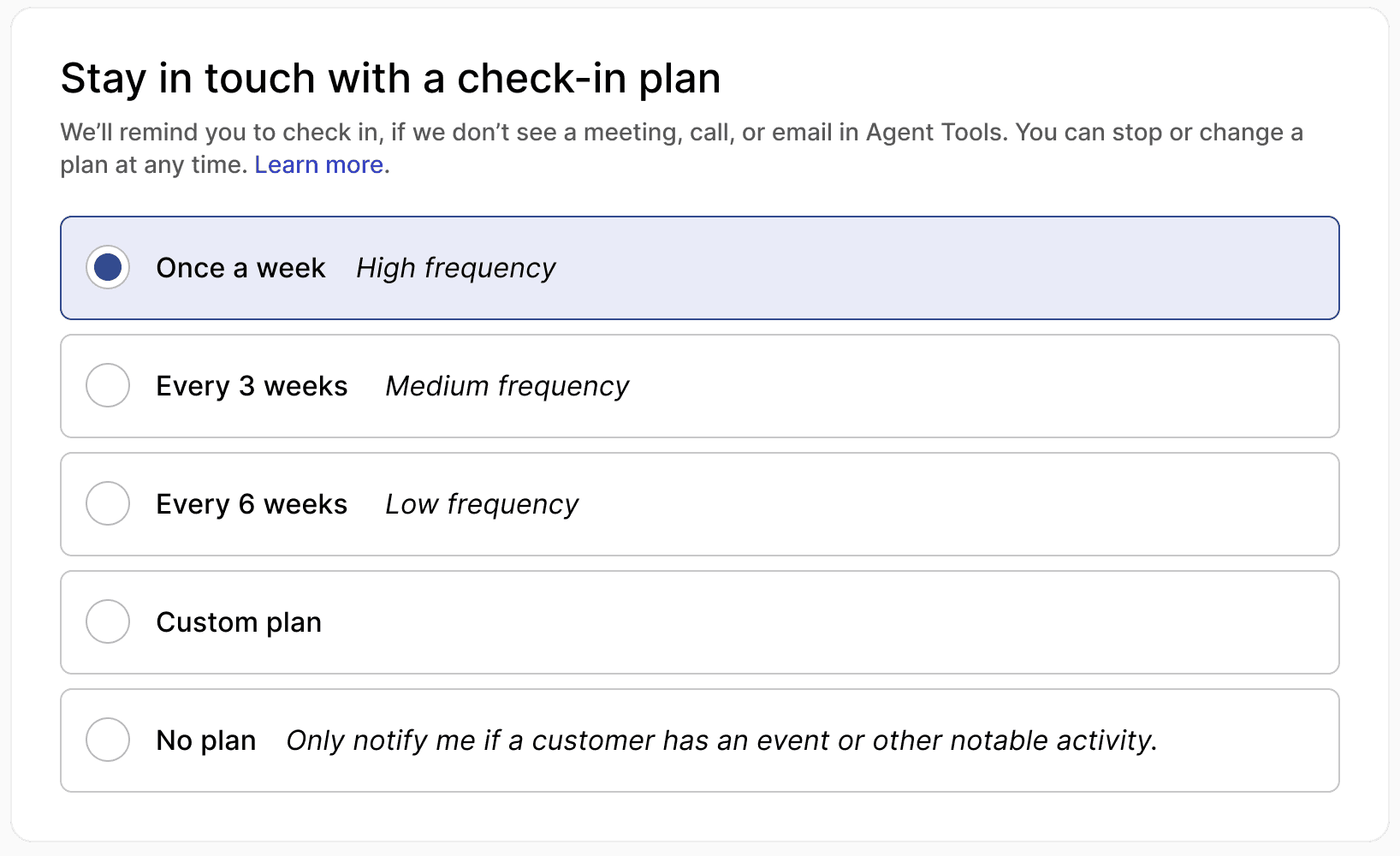
We offered a template library to agents, but it was limited in scope. Messages were often unhelpful, or painfully generic. The library was badly organized and difficult to use.
If agents were going to reach out to customers more frequently, they needed something worthwhile to say.
We introduced a brand new template library with template suggestions and templates organized by topic/purpose. Though I did not write the final templates, I wrote content guidelines to help our writers craft messages informed by agent best-practices.
Clear Calls to Action
Our emails should always give customers a simple, specific next step to take. The goal varies depending on the customer’s engagement.
For less engaged customers, engagement is the top priority
Messages can be generic, but must always provide something of value: advice on the home search, market data, or an offer of specific help.
For more engaged customers, progress is the top priority
Agents should prioritize helping these customers forward in their journey via pre-approval, touring, or meeting with their agent.
If the agent knows the customer well, the follow-up should reflect that
We shouldn’t promote fully templated emails for customers the agent already has a connection with.
Results
Staying in touch helped agents get more deals.
A 10-basis-point increase in purchase rate might sound modest, but in real estate, fractions of a percent translate to meaningful revenue. When each transaction represents someone's largest purchase, helping agents convert even slightly more customers has real business impact.
The 9-point lift in customer contact during days 7-60 showed agents were more proactive about guiding customers through the first two months. The 70% task completion rate suggested agents found the reminders useful.
10-basis-point increase
Home purchase rate
9 point lift
Customers who heard from their agent between days 7-60 of their search
70% task completion
Check-in reminders completed by agents